Friday, 16 October 2015

Growing up at Garswood


Garswood, 7 Diglee Road, Furness Vale


Garswood is one of the three "Australian Bungalows" on Diglee Road. This story, by a previous resident, at present un-named, is an account of the house where she was born. The introductory, and perhaps closing pages are missing.  The author of this article is believed to be Olive Wallwork. The introductory paragraph refers to her parents.

Later they moved further into the country, to Whaley Bridge, renting Lochaber, a large stone-built semi-detached house on Start Lane at the top of Whaley Lane where they had an Irish terrier called Kerry and a white cat. They also took on a live-in-maid, Sarah Kelly, who came from Hensingham near Whitehaven. She had previously been a laundry maid at St Bees School, walking daily across the cliff tops from Hensingham to the school together with other domestic workers, many of whom became her lifelong friends Sarah had left St Bees ‘to go into service’ a few years before she joined my parents at Lochaber, though I don’t know what families she was with. I think they must have been fairly wealthy, because she was a stickler for doing things correctly and for good manners. In those days people who came to stay still tipped the maid when they left !  her knowledge of the right way to lay a table and fold table napkins, take in the letters and visiting cards on a silver tray, cook and serve meals and other niceties was second to none. She was an extremely good cook and baked marvellous cakes, lemon meringue pies, bread, made jams and marmalade and so on. These talents were particularly impressive given the rationing and general restrictions of the war years.

The house where I was born, Garswood, Furness Vale.

About 1933, the year before I was born my parents decided that Whaley Lane was too steep to push a pram up and therefore moved to Furness. Sarah came too.  Yeardsley Lane, which leads up from the village to Diglee Road was still a hill, but shorter!  Garswood overlooked fields and farmland.
There were three bungalows built by the Knowles-Barton family who lived higher up Diglee Road at a house called Heatherby. The Knowles-Boltons were the gentry of the village

Neighbours in Bugsworth

Bugsworth Basin Heritage Trust has taken over the work of the former Inland Waterways Protection Society. Formed in 1958 this organisation has been instrumental in the restoration and management of this once busy inland port.  The Heritage Trust has a brand new website full of historical information as well as a guide to the canal basin.  http://www.bugsworthbasin.org/
The Protection Society published a quarterly newsletter containing articles about the restoration of Bugsworth as well as news and historical features of the canal system. An archive of newsletters between 2001 and 2012 is available online: http://old.bugsworthbasin.org/pages/news.htm

Don't miss our December meeting when Ian Edgar tells the story of the restoration of Bugsworth Basin.


Wednesday, 14 October 2015


Bookshop

Keith Warrender, the speaker at our October meeting brought along a selection of books of which he is both author and publisher. Keith also publishes titles of local and historical interest by other authors. Below are just a few of the available editions offered by mail order.


Tuesday, 13 October 2015

A Village Secret


The white pipeline markers around our village are a familiar sight. They indicate a system serving many parts of the country which started out as a closely guarded secret.

Britain’s oil pipelines were planned in 1936 when it was realised that supplies to the RAF might be vulnerable in time of war . The first was completed in 1938 and linked the ports at Avonmouth and Liverpool which at the time were the principal oil importation docks.  It would allow delivery of oil by road and rail to continue should one of the terminals be out of action.

With the outbreak of war in 1939 it was decided to build a number of underground oil storage facilities linked directly to the pipeline which would then extend eastwards to supply the key airfields in East Anglia, Lincolnshire, Essex, Kent and the south Midlands . Work was carried out at dead of night lest the Luftwaffe should see what was going on.
It was re-named The Government Pipelines and Storage System (GPSS) and in anticipation of the invasion of France was extended further with additional storage depots. RAF and USAF bases could now be fully supplied as could the English Channel pipeline, Operation Pluto.

With the end of the war, ownership passed to the Oil and Pipelines Agency (OPA), part of the Ministry of Defence and whilst remaining secret, private use was encouraged. The pipeline was extended as a result, to serve each British oil refinery as well as major airports and that passing through Furness Vale, supplies Manchester Airport. Following fuel protests in the year 2000 and blockages of refineries, it was decided by the M O D to further extend the network.

March 2015 saw the system privatised when it was sold for £82 million to the Spanish company Compañía Logística de Hidrocarburos (CLH)

Until the sale, the RAF flew the entire 2400 km length of the pipeline each day to check for damage.
There are only two reported incidents, one at Patchway near Bristol in 1998 and another in 2000 when some workmen severed the pipe at Yeardsley Lane. The event prompted a live TV news broadcast while residents were evacuated from their homes.


Here is one of the few places where the pipeline is exposed as it crosses Furness Clough. There is another white marker at the top of the bank.
 

Sunday, 11 October 2015

Monday, 24 August 2015

A Dabber's Nantwich

Not many miles from here is the historic Cheshire town of Nantwich. Those who know the town, or would like to learn more will find the "Dabber's" website full of interesting information. Click on the "Old Nantwich" pictures for a fascinating look back at the past.  You will find the web site at http://www.dabbersnantwich.me.uk/

This is Beam Street, Nantwich about 1910

Tuesday, 18 August 2015

Chapel-en-le-Frith's Bus Station


The Chapel-en-le-Frith factory of Ferodo opened in 1902,  The Company took its name from the founder Herbert Frood who in 1897 had used his garden shed in Combs to experiment in brake materials. The first factory opened in Gorton in 1901 but trade quickly expanded and the Sovereign and Howden Mills in Chapel were rented. As Ferodo grew it employed large numbers of people, many of whom travelled from neighbouring towns and villages. Most of these workers travelled by bus. In 1931 special works services were provided by the North Western bus company as the regular bus services could no longer cope with demand. A works bus station was built in 1937. It  was only in use for 90 minutes each day, at the start and end of each working shift. In 1954, a new, larger bus station was built, capable of handling 24 buses at a time.  In the morning peak,  28 vehicles were needed with services from as far afield as Stockport, Buxton, Hayfield and many other localities.  There were 50 departures each day with the peak period being at 5.30 pm when 25 buses left within a 10 minute period carrying  1100 passengers. 

The photos are from the archives of “Commercial Motor”


A North Western Bristol passes the Old Hall Inn at Whitehough en route for Horwich End.

Monday, 17 August 2015

Modern Comforts

A "chara" poses on Long Hill. This was 9th March 1916 and the Caledon bus was on a demonstration tour. The article is from the archives of Commercial Motor.

Monday, 10 August 2015

Lady Amelia-Caroline Jodrell

Edmund Jodrell succeeded to the Yeardsley estates in 1547 when aged 6 years.  His younger brother was Roger Jodrell from whom the following line of descent is traced: Thomas Jodrell, Paul Jodrell of Sion Hill,Middlesex (died 1728), Paul Jodrell of Duffield, Derbys (died 1744),Paul Jodrell of Duffield (died 1751), Richard-Paul Jodrell died 1831, Sir Richard-Paul Jodrell. These were distant cousins of the Jodrells of Yeardsley and Taxal.
Sir Richard-Paul Jodrell was married in 1816 to Amelia-Caroline, the daughter of the Earl of Kingston.
This picture of Lady Jodrell appeared in "The Court Magazine and Monthly Critic" of 1837


Saturday, 1 August 2015

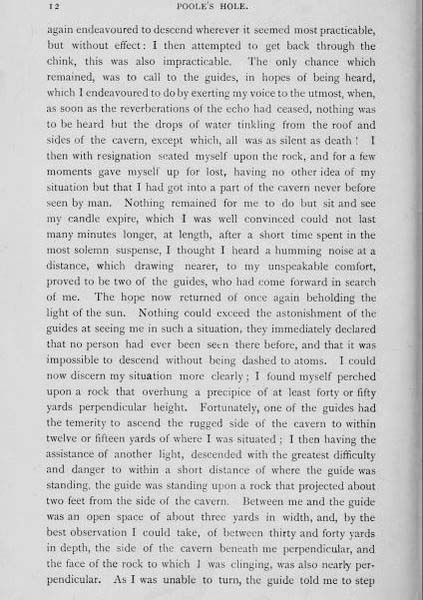
A Visit to Poole's Cavern 1794

From the Journal of the Derbyshire Archaeological Society


ALEHOUSES IN DERBYSHIRE 1577


The article above is an extract from the Journal of the Derbyshire Archaeological Society of 1879.
The list covers the entire County of Derbyshire although we have only included those places in our neighbourhood. Furness Vale and Whaley Bridge were of course in Cheshire at that time although it is doubtful that any local inns existed here in the  16th Century.  There is no mention of any location closer to New Mills, than "Heyfelde". 


Saturday, 18 July 2015

George Smith

It is quite common for residents of Furness Vale to live well into their nineties and George Smith was no exception.  The following tribute is from Miss Hobson's notebook:


Mr. George Smith

died February 15th 1913 aged 94 years

For 40 years Mr Smith had been employed as a block printer at the Birch Vale Printworks. He walked there daily from Furness Vale.
He was a well known  musician and at the time of his death was the eldest surviving member of the New Mills Old Prize Band. He played the ophicleide, a large instrument now seldom seen. Before the coming of the railway, on many occasions he had walked with the band to play at Ashton or Stalybridge. For many years before St. John’s Church was built Mr Smith attended the services in the old mission room and accompanied the singing on his instrument.
Mr Smith had lived through the reigns of Georges III, IV and V and those of three other monarchs. At the Coronation of George V in 1911 he, as the oldest resident lit the bonfire at Furness Vale.
As a last tribute the New Mills Old Prize Band marched to the funeral at Taxal, playing the Dead March and other sacred music.


Sunday, 12 July 2015

Dr Allen's Casebook

The name of Whaley Bridge's famed  DR ALLEN  appeared quite frequently in press reports of the 1880's and 1890's.  

As will be seen DR ALLEN himself was sometimes the victim

April 1881  An inquest was held at the Joddrell Arms into the death of a child whose decomposed body was found in Toddbrook Reservoir. Dr Allen had made the postmortem examination and found that the baby had lived a day or two.  He was unable to say whether the child had suffocated or died from neglect.  There was a bruise to the
head but  this had not caused death. The body 20 inches in length had been placed in a biscuit tin

The Eccentric Mr Thornhill of Ollerenshaw Hall

Please note the corrections at the end of this article.


Mr Thornhill had made his fortune as a carrier in Stockport. This was a family business which he carried on in partnership with his brother James. In 1822, Thornhill purchased Ollerenshaw Hall for £8000 together with 170 acres and retired from the business.  He and James continued their association with the business for nearly a year in order to help their nephews, the Messrs Hall,  take over the affairs. In retirement he resided on the estate.

Thornhill was described as a man of penurious and parsimonious habits whilst also rather ostentatious. This was a man with a kind disposition who employed large numbers of local people at Ollerenshaw, who would otherwise have been out of work. Parsimony however, was exhibited in the smallness of the wages he paid.
Over The Hills

In January 1883 The Derby Mercury described one of the last journeys taken by a passenger on the Cromford and High Peak Railway.

It was in August 1877 and thinking I should like to see the country through which it passed, I went to Stonehouse, generally called "Stonnis", just by the Black Rocks where the railway crosses the Wirksworth Road and enquired of a man in the office for the train.  "Do you mean the Fly" was the reply, "Yes", but the official, not knowing whether the "Fly" had passed or not, went out to enquire and brought back word that it had gone, but that if I followed it up the line, I might catch it at the siding; and if not, I should be sure to overtake it at "Middleton Run".  I accordingly gave chase, and at length caught site of it being drawn up the incline by a rope and a stationary engine.

Friday, 10 July 2015

Kettleshulme Candle Wick Mill

Tucked away in a valley at the back of Kettleshulme in Cheshire is the derelict Lumb Hole (or Grove) Mill better known as the Candlewick Mill.


This dates from  1797 although it was extensively re-built in 1823 with further extensions later in that century. The three storey building is of sandstone with a Kerridge slate roof. The buildings opposite included the manager's house and offices. The upper part of the boilerhouse chimney has been removed and the lantern above the stairwell has been lost. This had originally been a cotton mill and was purchased by Mr Sheldon following a fire in the 1820's. The mill was re-equipped to manufacture candle wick, especially for miner's lamps, a trade which continued until closure in 1937.  The company was originally styled "John Sheldon and Son", a partnership between John and John Thomas Sheldon which was dissolved in 1875. The company was later known as Sheldon Brothers.

Thursday, 9 July 2015

The Jodrell Estate.

The Jodrell Estate which included Yeardsley Hall, Shalcross Hall and Taxal Lodge was sold by auction in 1923.

Shirley Bowker has kindly sent a copy of the auction catalogue.  This has been reproduced in its entirety and can be viewed by clicking the tab above, marked "Sale Of The Jodrell Estate"


Saturday, 4 July 2015

Chinley


Hidden away behind the high hills of North Derbyshire and served only along a by-road, Chinley feels remote.  The fact that one can be in Manchester in 30 minutes by a fast train has turned Chinley into something of a commuter village. It is the presence of the railway that caused this community to grow from a small hamlet, for this was once a major railway junction with a station of six platforms. London trains regularly called here as did services to Sheffield, Derby, Buxton, Manchester and beyond. The station once boasted a refreshment room and bookstall as well as the usual waiting rooms and booking offices. There was a large goods yard, a turntable and two signal boxes. The station now has a train every two hours and passengers wait in a glazed shelter on the single island platform.

On the train  from Manchester Central to Chinley

Sleep descended upon the ruddy gentleman who had been with friends and when the train stopped at Withington a "good samaritan" joggled him and shouted "Withington, D'y' want to ger out 'ere?. The dreamy one shook his head in sleepy denial and snored again until awakened at Didsbury by the same kind hand and voice. . At Heaton Mersey the voluntary knocker-up repeated his dose of questions, accompanied by the usual shaking, and finally, at Stockport, really aroused his patient and harangued him thus: "I'm gerrin' out 'ere myself. This is Stockport!  See Stockport!.  D'y want to ger out 'ere? 

Thursday, 25 June 2015

Miss Hobson's History of Furness Vale.

Miss Hobson, who taught at Furness Vale School was an early researcher of our local history. She mounted an exhibition at the school and the boards displaying her village timeline are among the History Society archives. We also have Miss Hobson's notebooks in which she recorded much of her research. As these are scanned to the computer and transcribed, we will publish some of these items.

 Change of address.   The village bank moved in 1914 from the premises opposite the school, to Jackson's shop.  It had perhaps been sited at no 116 Buxton Road which was later to become the doctor's surgery. It moved to the corner of Station Road and again in 1933 to 99 Buxton Road. The bank finally closed in 1974.

Furness Vale Co-operative Society was formed in 1860 following a meeting at the National School in Whaley Bridge and opened the following year with a capital of £80.  Their first premises was the same shop at the corner of Station Road which they occupied until moving to a purpose built store opposite.

First Buses.  1901  Rhodes mineral water manufacturers in Whaley, ran buses between Whaley and New Mills (3d all the way).
                       1921 The first buses ran through to Buxton.

Monday, 22 June 2015

Chapel-en-le-Frith Through Time

We have received a review copy of Mike Smith's book Chapel-en-le-Frith Through Time.  Nearly 100 pages of photographs make comparison between the present day and scenes from the past. The 180 pictures in colour and monochrome are fully captioned.


"Chapel-en-le-Frith was founded in 1225 when foresters of the Royal Forest of the Peak were allowed to build a chapel in the forest. Buildings which have survivedd to the present time tell of a market town that developed into an important stopping place on trans-Pennine routes and played a major role in the history of transport. In the gritstone hills that surround the town, there is a remarkable concentration of ancient halls, as well as a wealth of unspoilt hamlets.

As well as highlighting how changes in lifestyle have impacted on the appearance of Chapel, the photographs show that the older parts of the town and the surrounding hamlets have change surprisingly little. Customs and traditions have also continued into the present century, thanks to the determination of the townspeople to preserve long established clubs and societies. The story of Chapel-en-le-Frith is about continuity, as well as change. This edition of Chapel-en-le-Frith is fully updated."

The book is available from local outlets, price £14.99 or from the publishers Amberley Publishing, The Hill, Merrywalks, Stroud GL5 4EP.   www.amberley-books.com
An e-book version is also available for Kindle and other electronic book readers.

Monday, 15 June 2015

Furness Vale 1972

A painting by John Burke

Furness Vale Burial Society Minute Book

This is from one of the scrapbooks of Sam Plant which have been donated to the History Society. It consists of 43 pages which mostly record people's deaths. The book does also include many snippets of local events which make it fasccinating to read.

Saturday, 13 June 2015

Mapping The Past

Oldmapsonline is an internet resource that allows the user to search library collections for period maps that may be viewed online. http://www.oldmapsonline.org Search options allow for a range of dates as well as a location search. Searching for Furness Vale returned a wide selection including "Cary's New Map of England And Wales, With Part Of Scotland" This was published in 1794 at a scale of 1:360,000.  The road between Disley and Whaley Bridge still followed the route of the old Roman Road. The turnpike through Furness Vale was not opened until 1804. The Peak Forest Canal is shown although it was still under construction when the map was surveyed. This is a small scale map and our village is not shown.  Some of the place names were spelt quite differently.


Tuesday, 9 June 2015

Sam Plant's Scrapbooks.


These notebooks have been donated to Furness Vale History Society by James Plant, grandson of the compiler. Some of the entries are in the form of a diary and a few are reproduced below. I shall post more snippets as more of the books are transcribed.

On the 15th January 1891 Albert Swares got his leg broken in Whaley Wood by Shirt of Newtown.
He was locked up at Disley by Whaley police. They fought together at Furness.

May 13th 1891 Wednesday. Joseph Carter of Furness Vale was put on as treasurer for the Co-operative store Whaley Bridge.

May 10th 1891 Sunday. Richard Fox boatbuilder Bridgemont died age 76 years. Buried at Mount Pleasant New Mills May 14th 1891.

Wednesday, 3 June 2015

Whaley Bridge Village Reunion

 Whaley Bridge Village Reunion - All Day 18th July from 2pm
Whaley Bridge Bowling Club

Dear Friends and fellow villagers. You are cordially invited to a unique event, which has only been made possible through the power of the internet, Facebook and Keith Hadfield who created the group Growing Up in Whaley Bridge.

My fellow host, John Hallows, and I, have secured an all day and evening reservation at the Bowling Club, which is managed by Whaleyites too.... John & Tracey Golpin.

We planned on making a small door charge to cover any small expenditures, and every penny over that, will be divided 50/50 between the 2 village schools. We can't charge though, so it was suggested we have a donations bucket when you arrive, & the same applies: all donations will be given to the 2 schools which is where most of us spent some time over the decades. :)

We are not putting on any food - you are at liberty to pop back home, or bring a picnic ( eat in the park or outside the club on the verandha) go to the chippy, the pubs that do food, or one of the local restaurants. Support our local businesses!

Please feel free to invite family members, or locals who don't have a computer, or Facebook, and come along for an hour or 2 or stay all day long.

I shall be making some posters to put up round the village too. We will have some stick on tags ( from Stampiton, of course) so you can have your name proudly on display. for those of us who may have changed since we were 11 years old, it might be a good idea! :)

Lou, the ex-landlady of the Cock, has very kindly offered to be our photographer for the day. she will be taking as many group, family, school type photos as we wish. Afterwards, she will create a photo album which will be shared on the Group page for everyone to see.. She will be happy to give you her email address so you can send any of your own photos too.

Let's make this event a first.... but hopefully, not the last!

Chris Wilman and John Hallows.