Showing posts with label buxton. Show all posts

Sunday, 14 February 2021

Our Local Railways

 Mark Lomas has sent us some photographs from his collection, featurning some local railway scenes. 


An unidentified loco arrives in 1938 from Buxton with a train of six coaches.
 

This photograph of Chapel-en-le-Frith South is undated.  The signage and style of dress would suggest early 20th century.

Locomotive 2382 passes Fairfield Halt on its journey to Manchester. The 2-6-4 Tank engine was built in 1932 by the L M S. The station, just outside of Buxton, only had one platform. It was built in 1907 to serve the nearby golf club. Trains arriving from Manchester would call to set down passengers but nobody was allowed  to board  the train. There was no service in the other direction. The station closed in 1939.

A train emerges from Cowburn Tunnel in 1953. The loco appers to be number 40672, an L M S 2P Class 4-4-0 built in 1932.  The tunnel takes the Hope Valley line under the moors between Chinley and Edale and is just over 2 miles, 3.3 km in length. The photograph appears to be at the eastern end of the tunnel, near to Barber Booth.
 
Chee Tor Tunnel near Millers Dale carried the Midland Main Line through Derbyshire's Wye Valley. The line operated between 1863 and 1967. The locomotive number 1274 had been built in 1881 at the Midland Railway's Derbys Works. It is seen here hauling a local train in 1937,  possibly the shuttle service between Buxton and Millers Dale. The locomotive was withdrawn in that same year.

On the same line as Chee Tor, but near to Peak Forest is Great Rocks. The railway here is still operational and serves various quarries to the east of Buton. The locomotive is probably a class 4F,hundreds of whch were built between 1911 and 1941.

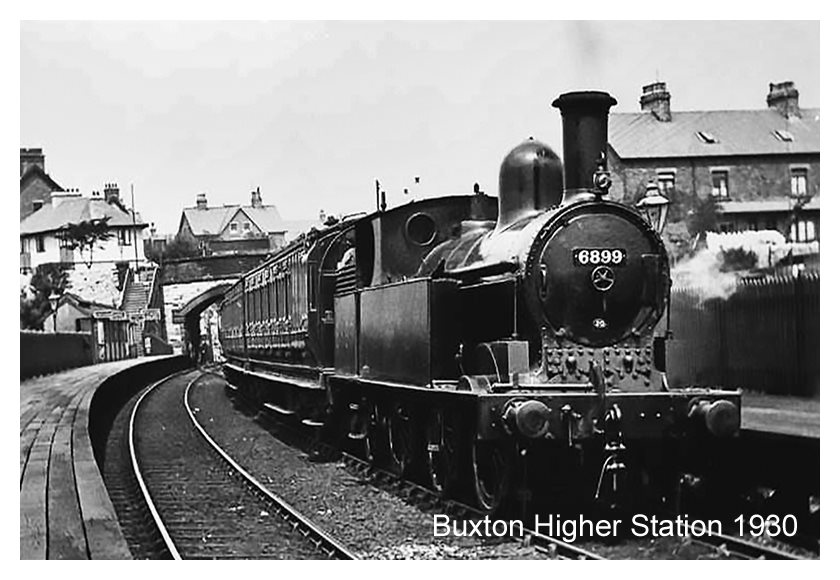
Buxton once had four railway stations.  That at Higher Buxton was on the line to Ashbourne and had opened in 1894. It was never busy and closed in 1951 although passenger trains on this line continued to operate until 1954. The bridge in the background carries Clifton Road across the railway. Out of viewto the left was a goods yard.  The railway is still operational, carrying limestone traffic from Dowlow Quarries. The locomotive 6899, is one of 300 built by the LNWR from 1881.

Hayfield Station at the end of the branch from New Mills. The photograph is either from the 1950s or early 1960s, before the introduction of diesel trains. On the right, a locomotive waits outside the engine shed.  The railway closed in 1970.


Saturday, 8 August 2020

An Overnight Stay


                                           The "Round House" or "Honey Pot" at Curbar 


In 1863, John Warren wrote in his diary: "William WELCH of Whaley Bridge was put in the Buxton Lockups for being Drunk and Disordley the cost was all together £4.2s.6d."
The fine was the equivalent of £450 today, a hefty penalty for being drunk.
The location of the Buxton Lock-up is unknown. It had opened in 1829 and was in use until about 1899. The inspector of prisons described it in his 1850 report. It was a detached building with two cells, but no accommodation for a keeper. The building is very ill adapted for its purposes. It had been built at the cost of the township and was intended chiefly for vagrants in want of a nights lodging, and that was its main use. Only one cell was used, the other used to store coal and other articles. This cell is about 9 feet long, 6 feet wide and 6 feet high. It is dry, with an open fire. It had unglazed window, through which people outside might be hand anything in. There were two poles fixed on each side of the cell for seats, and there was some loose straw for bedding. The constable said that there were formerly proper benches, but that they had been pulled to pieces and burnt.' 
Many towns and villages had their own lock-ups, established mostly in the 19th century as local police forces were established although some were of a much earlier period.

Tuesday, 7 April 2020

OLD AMUSEMENTS AT BUXTON


In a  curious black letter book entitled "The benefit of the auncient Bathes of Buckstones, which cureth most greeuous Sicknesses, neuer before published; compiled by John Jones Phisition at the Kings mede nigh Darby, anno salutis 1572," is the following description of exercises and amusements adapted to the invalid.

To the sickly (says the author) small exercyse will serue, by reason of feeblenesse, not able too suffer pantynge, neyther verily so violent for them shalbee requysite. But if their strength will sustayne it, an exercyse conuenient for thyr callinge shalbee vsed


Trol in Madam.  The Ladyes, Gentlewomen, Wyues, and Maydes maye in " one of the galleries walke ;  and if the weather bee not agreeable to their expectacion they may haue in the end of a Benche, eleuen holes made, intoo the which to trowle pummetes or bowles of leade, bigge, little or meane or also of copper, tynne, woode, eyther vyolent or softe, after their owne discretion. The pastyme Trowle in Madame is  termed.
Lykewise, men feeble the same may also practise, in another gallery of the newe buyldinges, and this dooth not only strengthen the stomack, and vpper parts aboue the mydryfe, or wast,but also the middle partesbeneath the sharp gristle and the extreme partes as the handes and legges, according to the wayght of the thing trouled fast, soft or meane.

Bowling.  In lyke mannerbowling in allayes, the weather conuenient and the bowles fitte to suche game, as eyther in playne or longe allayes, or in suche as haue cranckes with  halfe bowles, which is  the fyner and gentler exercise.

Shoting the noblest exercyse.
 Shootinge at garden buttes, too them whom it  agreeeth and pleaseth, in place of noblest exercyse standeth, and that rather wyth longe bowe, than wyth tyller, stone bowe, or Ccrosse bowe.Albeit to them that otherwyse cannot, by reason of greefe, feeblenesse, or lacke of vse, they may be allowed.
This practise of all other manlyest, leaueth no part of the body vnexercised, the brest, backe, reynes, was, and armes, with drawing the thyghes, and legges, with running or going.

Wind ball, or yarne ball.  The wind baule, or yarne ball, betwene three or foure, shall not be invtile to be vsed, in a place conuenient, eache keeping theirlimite for tossing, wherin may bee a very profitable exercise, by cause at all tymes they keepe not the lyke force in stryking, so that they shalbee constrayned too vse more violent stretching, with swifter mouing at one tyme than another, which will make the exercise more nymble and deliuerr, both of hand and whole body, therefore encreasing of heat, through swift moouing, in all partes the sooner.

Plumbes, or weightes.
Plumbetes, of Galene termed alteres, one borne in eche hand, vp and downe the stayers, galeries, or chambers, according to your strength, maye bee a  goode and profitable exercise: so may you vse wayghtes in lyke maner.

Bow lyne. A fyne hallyer, or bowe lyne, a foote or twoo hyer then a man may reache, fastened in length, some way, shall not bee vnprofitable, holden by the handes, thereby to streche them; very excellent, as well for stretching of the mydrife, interne panicles and wast, with all the rest of the partes, as also to preserue and defend them from apostemes, obstructions, and paynes thereto incident.
These exercyse of your owne power, I thinke, for thys place sufficient. Nowe we will shewe how they may bee profitable vnto you thorow others mouing; as well by waggon, charriet, horselitter, and ryding, as by cradle and chayor hanged, in sorte as to that vse may be best framedd, all very profitable, as they may bee exercised: much, little, or meane, close, or open in the ayre, as to the parties shall bee requisite:  taking time likewyse in rocking by vice or engyne; or on the floure, which is more shaking, and therefore to them that may suffer it more profitable.
The other good to weaker persons, as that in frame, conueyed by pendent, from one to another, standing asunder according to the length of the engyne, three or iij fedome drawen from them to the other, swift, slow, or meane, long, short, or mean, as to the party shalbe conuenient. Omitting other deuises to opportunity, &c.
Eu. Hood


published in The Gentleman's Magazine 1824
 

Saturday, 21 March 2020

Remembering The Old Clubhouse

When I went to school at Buxton I went from WB to Buxton on the train and passed it every week day. It was a members’ only club called The Union Club. It looked very posh and exclusive from the outside.
It was converted in the 70’s to The Old Clubhouse by Chris Brindley, landlord of The Eagle Hotel and Jimmy Milburn, managing director of the building firm Milburn and Mills.
Milburn and Mills had their offices on Lightwood Road on the site of the old outdoor swimming pool. I went there a couple of times as a young lad and it was absolutely freezing. But when M & M took occupation of the site they filled in the pool to make a ‘yard’ and used the changing rooms as their office. I worked there for a year as company quantity surveyor until I could stand it no longer. Everyday somebody would stagger into the office blind drunk and more often than not it would be Jimmy himself. He used to drive a large Mercedes car and took no notice at all of the drink driving laws.
Some mornings he would ring me from his home and ask me to take his kids to school. They were pests and were always trying to make me crash.
Then I would have to go back for Jim as his car wasn’t there. He couldn’t remember how he had got home but we needed to pick his car up from outside The Gaslight Club. It wasn’t there. Ah it must be outside The Queens; not there either. Ashwood Park Hotel then. Wrong. Prince of Wales perhaps.
No chance. Nineteenth Hole. Yes that’s where it will be. But it wasn’t.
Then I spotted it on the grass opposite the Golf Club. Right Jim, there it is, have you got your keys? Er, no.
Well I drove him to the side of the Mercedes and the window was right down and the keys were in the ignition. Ah, I knew I wouldn’t have mislaid them he said. What time is it? Look the Golf Club’s door is open let’s nip in for a few scoops.

Loads more on Jimmy one day

Tony Beswick. 


The Old Clubhouse Roof.  A watercolour by David Easton


Once Jim decided to splash the cash and he bought a reasonable plot of land and got Planning Permission to build 3 bungalows and 2 houses. The design was good and from a distance the properties looked very good. I won’t mention the location because hopefully they are till standing and are occupied.
The bungalows were completed first mainly because Jim was going to live in one and his partner Mills in another one.
They were virtually complete apart from kitchens, decoration and carpets when there was an unexpected visit from the Structural Engineer who had spotted a mistake on the drawings. There was a point where the roof had inadequate support and needed to be reinforced somehow. He did a quick on site sketch whereby a pillar needed to be built in the hallway and indeed it could be made into a feature if built from stone.
Jim agreed immediately. But then the Structural Engineer dropped a bombshell: a foundation would be needed and this meant the concrete floor would need to sawn out and a concrete foundation would have to be put in and he reminded Jim that the hardcore under the slab must not exceed 600mm and that would be where he should find the original clay which he could concrete on.

Now I knew full well that the hardcore was at least 1200mm in depth due to the original ground levels and I wondered how Jim would get out of yet another mess.
As soon as the Engineer had gone Jim turned to me and said: “Right you. How are you going to get me out of this?”
“Well just what do you expect me to do Jim. It is what it is.”

As it was Friday I went home and hardly gave it another thought.
When I went into the office on the Monday morning Jim arrived at about 11.00am after shaking off yet another severe hang over and he phoned the Engineer and told him the job was done and could he come out after lunch to do a final inspection as Jim was in a hurry to finish the bungalows.
The Engineer said that was fine and he would be on site at 2.00pm
Intrigued, I went round to the site and we all gathered around the hole which now had a firm clay foundation just below the floor slab level. The Engineer prodded it and declared it suitable to concrete on and gave Jim the go ahead.
Jim went to the pub and I went back to the office and shortly Jim’s partner Mills rocked up. And I asked him how such a thing could have happened and he told me Jim had sent Salty the apprentice bricklayer round the back of the 2 houses and dig out some clay and he told him to tip it into the hole and tread it down and then tamp it down to make it look like virgin clay which it did.
So as Jim said: “Bob’s your uncle get it concreted in and get on with your work. I’m off to a business meeting.”
Which everyone knew meant he was off to The Golf Club or somewhere like that.

Tony.

Wednesday, 4 March 2020

An Artful Trick


The other day, as one of the coaches which plies between Buxton and Manchester was ascending the hill near Taxal, the coachman was accosted by an Irish woman with a child in her arms, requesting him to "give her a ride". He replied, "that the proprietors employed him to receive fares, not to give rides." upon which she, pretending to find her pocket among the folds of her ragged dress said, "Sure and have you change for a sovereign?". The coachman, elated with the prospect of receiving his short fare, ordered her to get on and he would furnish the change at Buxton. On arrival at the destination, the woman alighted and was proceeding apace without producing the coloured material, when the coachman, in a stentorian voice exclaimed, "Hallo, you have not paid your fare."  "Fare do you mean, sir, sure and I have only a penny in my pocket." "Then why did you ask me for change?" replied the coachman. "Sure and it was the change that I wanted; the devil of a sovereign had I." The coachman, much chagrined at the loss of his anticipated fare, at the request of a passenger, allowed the woman for her craft, to proceed on her journey.

The Blackburn Standard 3rd December 1845

Sunday, 9 February 2020

Vera Brittain and Buxton


“The myth of female inferiority has always been rooted in the contention that men die for their country but women do not”, Vera Britain  was author of Testament Of Youth and mother to Baroness Shirley Williams former British socialist member of parliament.

Having delayed her university education after a year, to work as a nurse treating the wounded who had survived the trenches of the First World War, Brittain was bereaved of four of her closest friends, including her beloved brother and her fiance. Exhausted and emotional she vowed that if she were to survive the war, she would do everything in her power to immortalise the memory of those lost to her. .
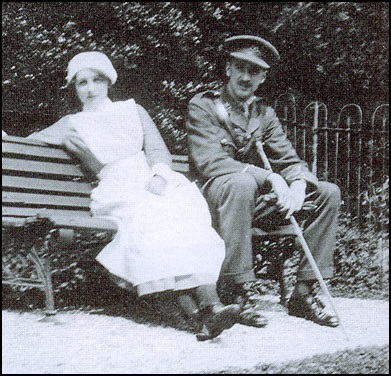
Her family moved from Macclesfield to Buxton when she was aged eleven. Despite the comforts of a villa in The Park, an exclusive corner of a fashionable English spa, she detested life in the town despising it’s Edwardian formalities. Educated mostly at boarding school and Somerville College Oxford she returned in 1915 to serve at the Devonshire Royal Hospital which at the time offered severely wounded soldiers, hydropathic treatments.

After the war she returned to Oxford to read History where a friendship developed with the author Winifred Holtby, known for her novel South Riding. They remained friends until Holtby’s death in 1936, sharing a house together, both determined to become prominent on the London literary scene.

Testament Of Youth, Brittain’s second novel, was published in 1933 and was an immediate success selling out on the day of publication and remaining a best seller to this day. This was the story of her wartime experiences.

From the early 1920’s she became one of England’s leading pacifists, her convictions becoming one of the major driving forces in her life. During the Second World War Vera served as a fire warden. Surprisingly her name appeared
in the Black Book of two thousand people who were to be arrested following a German invasion.

Vera had married George Catlin in 1925, a political scientist and philosopher. Their son John was an artist and author. Their daughter the previously mentioned Shirley Williams was born in 1930.

On a badly lit London Street on her way to give a talk on pacifism Vera Brittain stumbled and fell breaking an arm and her little finger, she nevertheless addressed the audience that awaited her. Thus beginning a physical decline that led to her death in 1970 aged 76. In her will she requested that her ashes be scattered on the grave of her brother Edward in Italy, stating “For nearly fifty years much of my heart has been in that Italian village cemetary”.


Friday, 4 October 2019

Sir Joseph Paxton


Joseph Paxton was from a humble background. He was born in August 1803 at Milton Bryan in Bedfordshire. His father, William was a tenant farmer and Joseph was the youngest of nine children. At the age of 15, he left school to work on the farm of an elder brother. His interests however lay in gardening and within a few months he had found employment with Sir Gregory Osborne Page-Turner at Battlesden Park, Woburn.  He stayed  in this post for five years and during that time created his first lake.

In 1823 he applied for a post at Chiswick Gardens, a property leased by the Horticultural Society from the Duke of Devonshire. Still only 20, he lied about his age, claiming to have been born in 1801. Within a year, he was promoted to foreman and often met the 6th Duke, William George Spencer Cavendish who owned the nearby Chiswick House. At the age of 23, Paxton was offered the post of Head Gardener at Chatsworth, the Cavendish family seat. The gardens were considered to be one of the finest of the time and he immediately accepted. He took a coach to Derbyshire that evening, arriving at Chatsworth early next morning. By the start of the working day, he had explored the gardens, re-organised the 80 garden staff, sat down to breakfast and met Sarah Brown, neice of the housekeeper, whom he was to marry in 1827. He claimed that by 9am he had completed his first morning's work.

Saturday, 8 October 2016

1920s Buxton in Colour

Buxton in the 1920s

In the foreground is the Samuel Turner Memorial Drinking fountain erected in 1878 in memory of a local benefactor.

On the left are The Slopes, public gardens laid out in 1818 by Jeffry Wyatville for the 6th Duke of Devonshire. Joseph Paxton made a number of alterations in the 1850s. In front of the Slopes can be seen some bath chairs, at one time a popular conveyance in the town.

Behind the glass collonade on the right is the Thermal Baths, designed by Henry Currey architect to the Duke of Devonshire and opened in 1854. Since 1987, this has been the Cavendish Arcade, a shopping centre housing an array of independent retailers.

The bus is a Tilling Stevens of the North Western Road Car Company. This operator was formed in 1923 and took delivery of the first vehicles from that manufacturer the following year.

Prominent in the picture is The Crescent, finished in 1789 to the design of John Carr for the 5th Duke. The Crescent is currently undergoing a major renovation and on completion will re-open as an hotel. Opposite is the Pump Room where visitors to Buxton “Took The Waters”. In the background is the Old Hall Hotel. Originally a four storey tower, the Hall was built in 1573 by Bess of Hardwick. Mary, Queen of Scots was housed there on several occasions  in the 1570s on order of Elizabeth 1st. Rebuilt in 1670 by the first Duke, it became an hotel in 1727 and still serves that purpose.

Buxton Opera House in 1923.


 Built in 1903, it was designed by Britain’s most prolific theatre architect, Frank Matcham. It was converted in 1927 for cinema use and extensively refurbished in 1979.
In the left foreground is the entrance to The Conservatory, part of the complex of buildings that face the Pavillion Gardens. This structure was built in 1870 to the design of Edward Milner.

On the right hand side is The Old Clubhouse, a pub and restaurant. It was built in 1886 as a gentlemen’s club and continued in that role until the mid 1980s.

The tower in the background is that of St. John The Baptist Parish Church. Built in 1811 to the design of John White it was the final project of the 5th Duke of Devonshire who died just after its completion.

The Pump Room, Buxton c1920.

  This elegant building was opened in 188,9 a gift to the town from the Duke of Devonshire. Here, one could sample the mineral waters for a penny a glass.  The Pump Room is currently being restored and will re-open as a tea room where once again visitors will be able to “take the waters”.


These three photographs have all been digitally colourised from black and white originals.

Monday, 29 August 2016

Taking The Waters

Raphael Tuck published a number of postcards on the theme of "Taking The Waters" featuring Buxton. Those released in 1909 were illustrated by Lance Thackeray, an artist who produced over 950 cartoons in his career.

A carriage passes The Slopes

Queuing at St Ann's Well
Sheltering from the typical Buxton weather on The Slopes. Devonshire Dome in the background


Also by Thackeray but from a different series is this card "Rivals For The Fare" with The Crescent in the background.
"Keep The Ball Rolling" by Thackeray.

In 1930, Tuck published postcards by Fred Buchanan, also on a theme of "Taking The Waters" and again featuring Buxton.

Add caption

Monday, 15 February 2016

Crime in the High Peak

FIRE

In 1905 William White appeared in court at Chapel-en-le-Frith, facing a charge of arson.  He had set fire to a haystack at Long Hill Farm.  He told Sergeant White that he had thought of going to Buxton to do a spot of housebreaking but had decided to set a haystack on fire instead.  He gave himself up to police at Buxton because he wanted to go to prison for 5 years !  The prisoner was remanded in custody; perhaps his wish came true.


OLD BONES

October 1861.  At the door of Knutsford Jail, Joseph Hales was arrested on release from his last imprisonment.  He was committed for trial at the petty sessions for stealing 2 cwt of bones, the property of John Newton of Whaley Bridge. Now who would be in the market for a bag of stolen bones I wonder ?


COMMON LAW OFFENCE
 A Whaley Bridge butcher was in the habit of delivering meat to Buxton by train but in order to reduce his costs, resorted to rather unusual methods which in 1932 put him on the wrong side of the law.  A railway detective was travelling on a train and on it's arrival at Whaley Bridge was approached by the butcher who asked if he was going to Buxton.   A large piece of meat was placed on the seat opposite with the request that it be delivered to the bookstall at Buxton.  On proferring threepence, the butcher said "it's all right, I often send it like this".   On arrival at the destination, a bookstall assistant came to collect the meat which was soon picked up by a local butcher.

On hearing the case, under the old English Common Law offence of cheating and deceiving, Stockport Magistrates were told that the defendent had been sending parcels in this manner for somne time.   The magistrates agreed with the defence that there had been no intention to defraud.  It was suggested that the practice must occur daily throughout the Kingdom.  Although the practice was improper and irregular, it was not illegal and the case was dismissed.


AN ITALIAN IMMIGRANT

May 1908 saw the appearance of an Italian named Soberti Diego before Stockport Police Court.  He was charged with being on enclosed premises for unlawful purposes and with assaulting a police officer in Whaley Bridge on April 27th.  Diego had been seen climbing from a waggon up into the rafters of the goods warehouse at the station. The prisoner had refused to descend and when the police constable arrived  he jumped onto a van and threw a stone at the officer and hit him in the chest.  Diego jumped over the waggons and  tried to escape but the pursuing policeman fell over him and a desperate struggle ensued.  The prisoner had a razor with which he attacked the officer, cutting his hand.  It was only when support arrived that the Italian was overpowered.  Speaking through an interpreter, Diego explained that he had arrived in England seven months previously and finding himself in Whaley Bridge without food or money, decided to head to London.  He thought he would be safe hiding in the rafters until a train should arrive.  He had only used the razor to prevent the police officer from choking him.   Soberti Diego was sentenced to 28 days in prison and advised to leave the country as soon as he was released.

A QUICK DIVORCE

Perhaps not a crime but even then, irregular behaviour

In 1837 a less conventional method was followed to dispose of a wife.
The wife of John Allen of Turnditch eloped with J Taylor of Shottle.  The injured husband heard that the couple were in lodgings at Whaley Bridge and resolved to settle the matter.  Finding them he demanded 3s for her clothes. Taylor said that he would pay this provided Allen would accompany them to Wirksworth next market day and deliver her according to the law. Arriving at Wirksworth, Allen purchased a halter, placed it around his wife and gave the end of the rope to Taylor saying "I, John  Allen, was bereaved of my wife by James Taylor of Shottle on 11th July last; I have brought her here to sell her for 3s 6d; will you buy her James?" Taylor answered "I will, here is the money, and you are witness Thomas Riley" calling to a potman who was appointed for the purpose.  The ring was delivered to Allen with three sovereigns and 3s 6d, when he shook hands with his wife and her paramour wishing them all the good luck in the world. She had been married to Allen at Kniveton about ten years ago and had lived together until then.


TRADING STANDARDS

Surprisingly there existed a Victorian equivalent of today's trading standards officer.
Esther Ollerenshaw of Whaley Bridge was a milk dealer and sent her produce, presumably by train to Manchester.  In March 1883 a can of milk was intercepted at London Road Station by Inspector Edwards and sent for analysis. The milk was found to contain 41% water.  A fine of 40 shillings was imposed.

Esther Ollerenshaw however, did not learn her lesson.  Twelve months later, almost to the day, Inspector Edwards again took a sample of milk from one of Mrs Ollerenshaw's consignments of milk. The sample was forwarded to the city analyst, Mr C. Estcourt and was found to contain 30% water. Mrs Ollerenshaw, a widow and farmer was summoned but denied watering the milk.  As this was her second offence she was on this occassion fined £3 plus costs.

Monday, 17 August 2015

Modern Comforts

A "chara" poses on Long Hill. This was 9th March 1916 and the Caledon bus was on a demonstration tour. The article is from the archives of Commercial Motor.